Introduction: Make your patio shine with less energy
Patio lighting sets the tone for evenings at home—dinners, game nights, or quiet conversations under the stars. In California, the best solutions combine ambiance, durability, and efficiency while respecting codes, neighbors, and the night sky. Whether you have a compact balcony, a shaded courtyard, or a sprawling deck, you can craft a lighting plan that feels tailored and timeless without wasting electricity. To visualize styles and performance options that meet these goals, browse well-curated examples of energy-efficient lights and note finishes, beam spreads, and color temperatures that match your architecture and furnishings.
This guide covers ideas for overhead, wall, step, and accent lighting; explores codes that shape residential exteriors; and outlines the qualitative factors that influence project budgets without focusing on specific numbers. You will also learn how to avoid glare, maintain consistency, and plan for durability in coastal fog or inland heat.
Design first: What do you want your patio to do
Begin with purpose. If your patio hosts dinners, prioritize dimmable, low-glare lighting over the table. For conversation areas, create pools of warm light that define seating without overpowering the space. Cooking zones benefit from brighter, neutral-white task light with good color rendering. Circulation zones and steps require safe, even illumination. By mapping activities, you can layer light efficiently rather than flooding the area with a single bright source.
Consider sightlines from indoors. Patio lighting should complement, not compete with, interior scenes. Keep color temperatures consistent across adjacent spaces to avoid visual jolts. Choose fixtures that echo your architectural style, whether streamlined modern sconces or traditional lantern shapes with updated LED engines.
Fixture ideas that deliver ambiance and efficiency
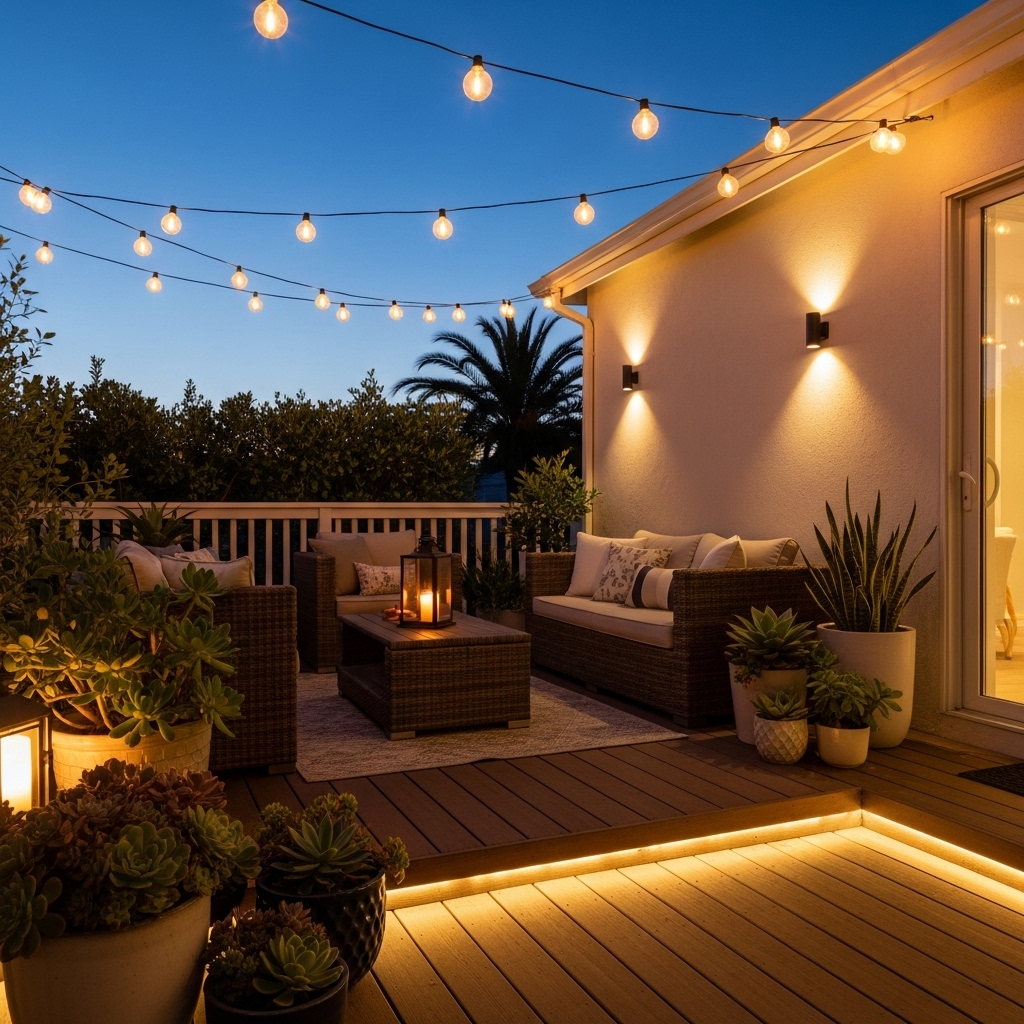
- Overhead pendants or ceiling lights: Use damp or wet-rated fixtures depending on exposure. Warm, dimmable LEDs set a welcoming tone over dining tables.
- String lights: Opt for commercial-grade, weather-rated strands with LED lamps and robust seals. Use dimming for mood and to reduce glare.
- Wall sconces: Select shielded designs that cast light down or up-and-down while keeping sources hidden. These frame doorways and anchor seating areas.
- Step and stair lights: Low, forward-throw optics increase safety without shining into eyes. Integrate into risers or side walls.
- Under-rail or undercap lights: Tuck linear LEDs under railings, benches, or caps for a floating glow that defines edges and prevents trips.
- Portable lanterns and table lamps: Choose rechargeable LED options for flexible ambiance and to avoid cords across walkways.
Color temperature and CRI outdoors
Warm light around 2700K–3000K sets a relaxed vibe for entertaining. Neutral-white near 3500K–4000K can help with food preparation or detail-oriented tasks. Keep CCT consistent in each zone; mixing warm and cool in a small patio can feel disjointed. High CRI makes materials—tile, stone, and wood—look natural and flattering during evening gatherings.
Glare control and comfort
Glare undermines ambiance. Use diffusers, baffles, and lenses to soften output. Position fixtures so guests are not staring into light sources. With string lights, select styles with frosted lenses or lower output and use dimming to dial in comfort. For sconces, aim for shielded distributions that graze walls and define space rather than projecting light directly outward.
Controls: Dimmers, sensors, and schedules
Controls let you do more with less light. Dimmers set the mood during dinner, then lower output for stargazing. Motion sensors are useful in access routes or side yards adjacent to the patio. Timers and astronomical clocks ensure lights turn on and off automatically with sunset and sunrise, saving energy and avoiding late-night glare. Smart platforms can create scenes that coordinate overhead, step, and landscape accents at once.
Durability in California conditions
Coastal areas demand corrosion-resistant finishes and sealed housings. Inland heat calls for drivers and LEDs rated for higher ambient temperatures. Wind-prone zones benefit from securely mounted fixtures and strain relief on string lights. For exposed locations, choose wet-rated luminaires; under covered patios, damp-rated may suffice. Maintain clearance around fixtures even though LEDs run cooler than traditional sources.
Power options and wiring notes
Combine line-voltage fixtures for overhead or wall lights with low-voltage accents for steps and rails. Keep circuits organized and accessible. Use weather-rated junction boxes and covers. For movable furniture layouts, consider outlets positioned for rechargeable table lamps and portable lanterns. If integrating new wiring into hardscape, plan conduits before finishing surfaces to avoid future disruptions.
Codes, neighbors, and night sky
California’s approach to exterior lighting encourages high efficacy, automatic shutoff, and responsible light levels. Shielded optics and warmer color temperatures help manage glare and reduce light trespass. Avoid uplight that contributes to sky glow, and aim fixtures to keep light within your property. For stairs and egress points, provide reliable illumination with careful glare control so transitions from interior to exterior feel safe and comfortable.
Ideas by patio type
Covered patio: Use a mix of dimmable ceiling fixtures and wall sconces with a consistent warm color temperature. Layer in under-rail lights for subtle edge definition.
Open deck: Combine string lights with step and undercap lighting. Consider path lights at transitions to the yard. Add motion-activated boosts near gates or side paths.
Balcony: Choose compact, shielded sconces and portable lanterns. Keep light levels modest to avoid spill onto neighbors’ windows.
Courtyard: Use wall washing to reveal textures and plant accents to create depth. Keep sources hidden for a calm nighttime ambiance.
Budget planning without fixating on numbers
Project size, fixture quality, wiring complexity, and control sophistication shape budgets. Durable, well-shielded luminaires can reduce the number of fixtures needed and lower long-term maintenance. Integrating conduits during hardscape work avoids later disruptions. Thoughtful zoning reduces runtime and power needs. Rather than chasing maximum brightness, prioritize optics and placement; this approach often yields better results with fewer fixtures.
Installation sequence
Define zones and select color temperatures. Mock up string light routes and sconce placements. Verify step and under-rail positions with temporary clips before drilling. Run wiring in planned conduits and use weather-rated connections. Test at dusk, adjust aiming and dimming ranges, and finalize mounting once you are satisfied with balance and comfort.
Maintenance for years of use
Clean lenses periodically and check seals after heavy weather. Keep documentation for drivers, dimmers, and smart hubs. Review scenes as seasons change; trimming runtime slightly in summer evenings can maintain ambiance while saving energy. Replace components in sets when possible to maintain color consistency.
Mid-project check: Are zones balanced
Before you commit to final mounting, step back and view the patio from key vantage points: dining table, seating, and interior rooms. Confirm that brightness steps feel natural and that color temperatures match the mood you want. If you need help visualizing styles and optics, explore example installations of energy-efficient lights to compare finishes, beam spreads, and mounting methods that suit your architecture and furniture layout.
FAQs
Question: What is the best color temperature for patio dining? Answer: Warm light around 2700K–3000K creates an inviting setting and flatters food and faces. Use dimming to adjust as the evening evolves.
Question: How do I keep string lights from being too bright? Answer: Choose LED strands with dimming, use frosted lenses, and space bulbs to avoid hotspots. Mount them slightly higher and out of direct sightlines when seated.
Question: Do I need wet-rated fixtures on a covered patio? Answer: Damp-rated may be sufficient under full cover, but exposed edges or wind-driven rain call for wet-rated luminaires. Check manufacturer ratings for your exact conditions.
Question: How can I minimize light spill to neighbors? Answer: Use shielded optics, aim lights downward, keep overall levels moderate, and select warmer color temperatures to reduce perceived glare.
Question: Are motion sensors helpful on patios? Answer: Yes, especially along side paths, gates, and entries. They add convenience and reduce energy use when areas are unoccupied.
Question: What maintenance should I plan for? Answer: Occasional cleaning of lenses, inspection of seals and wiring, and periodic review of control settings. Keep spare lamps or modules for critical fixtures to maintain uniformity.
Light your patio beautifully and responsibly
With a clear plan and the right components, your patio can feel welcoming, safe, and efficient every night of the year. Focus on layered light, shielded optics, and durable, weather-appropriate fixtures. When you are ready to refine choices and align form with function, explore proven options for energy-efficient lights, then finalize zones, controls, and mounting details that match your lifestyle. The result is a serene outdoor room that supports conversation, cooking, and calm—without wasting energy or disturbing the night sky.